Iside 4r Plus
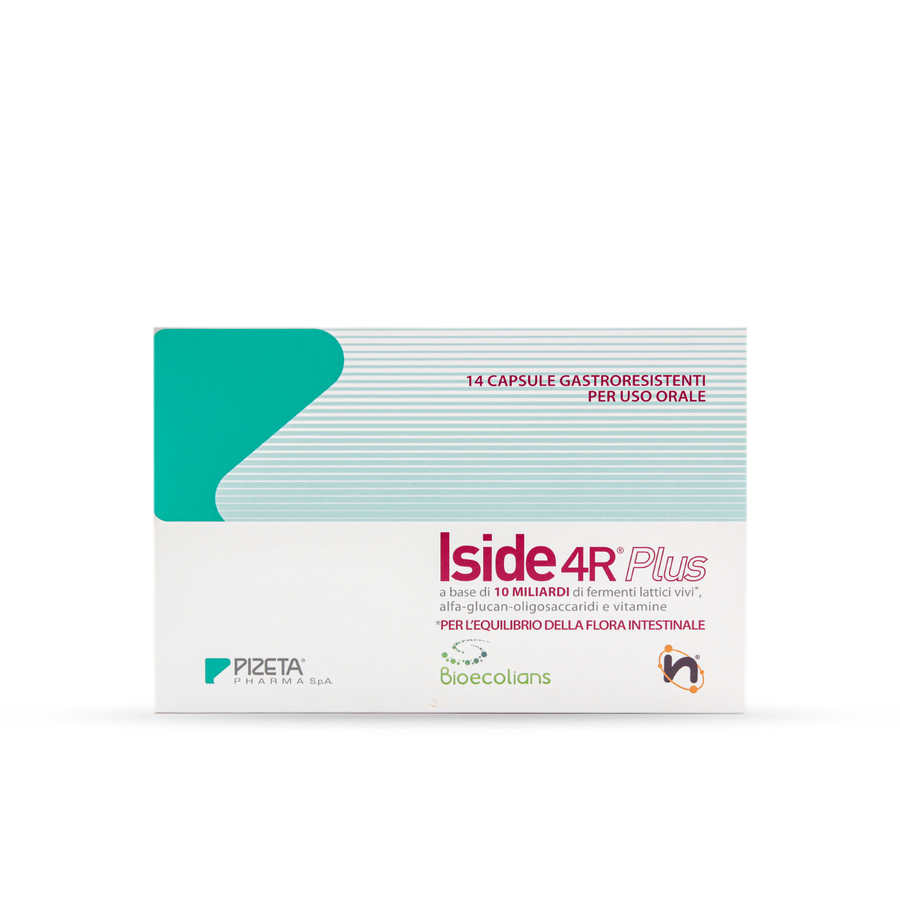
Iside 4R Plus is a dietary supplement containing selected probiotic strains that help maintain the balance of intestinal* and uro-vaginal bacterial flora.
€17,92
VAT included

The online shop is currently available only in Italy. For purchases from outside Italy, please contact us at shop@pizetapharma.com
Your transaction is protected with advanced security measures to keep your information private.


| Nutrient | Per capsule | Per dose (2 capsules) | NRV % |
|---|---|---|---|
| Vitamin B6 | 1.4 mg | 2.8 mg | 200% |
| Vitamin B12 | 2.5 µg | 5 µg | 200% |
| Folic acid | 200 µg | 400 µg | 200% |
| Zinc | 5 mg | 10 mg | 100% |
| Saw Palmetto Extract | 160 mg | 320 mg | — |

Iside 4R Plus is a dietary supplement containing selected probiotic strains that help maintain the balance of intestinal* and uro-vaginal bacterial flora.
La normativa sulla pubblicità dei dispositivi medici (Reg. (UE) 2017/745 e D.Lgs. 137/22) prevede che l’accesso alle informazioni di natura medica relative…
Flavoxelle is a phytoestrogen-free dietary supplement suitable for alleviating the various symptoms associated with perimenopause and menopause.