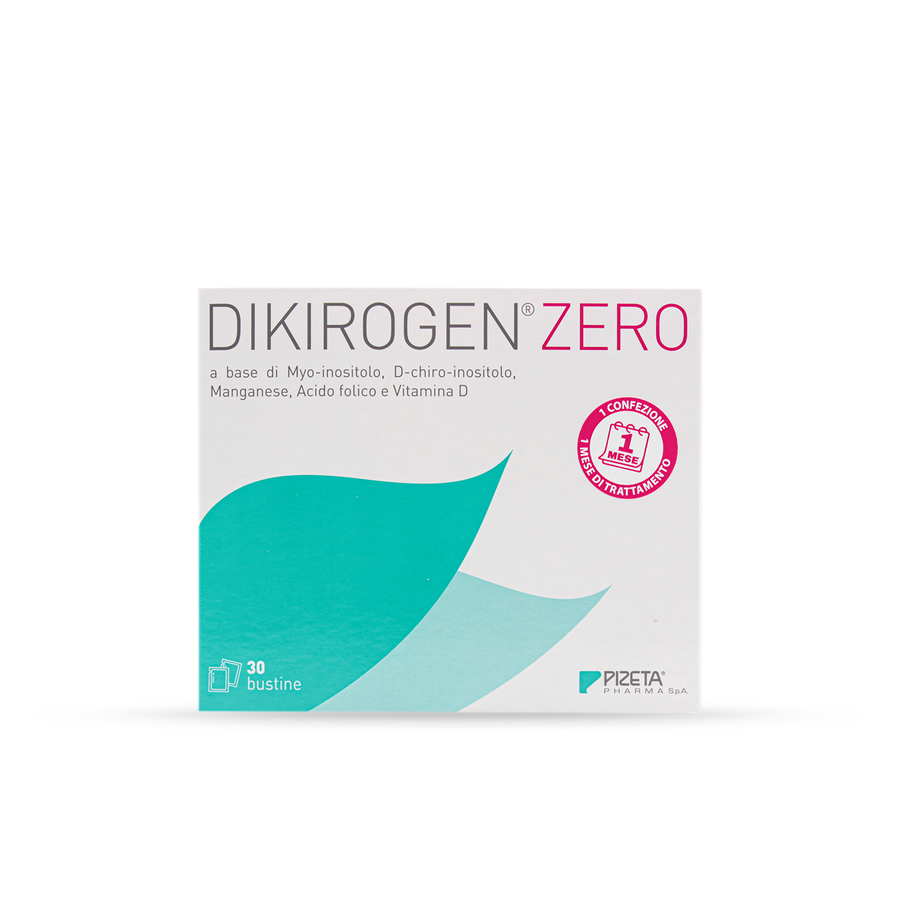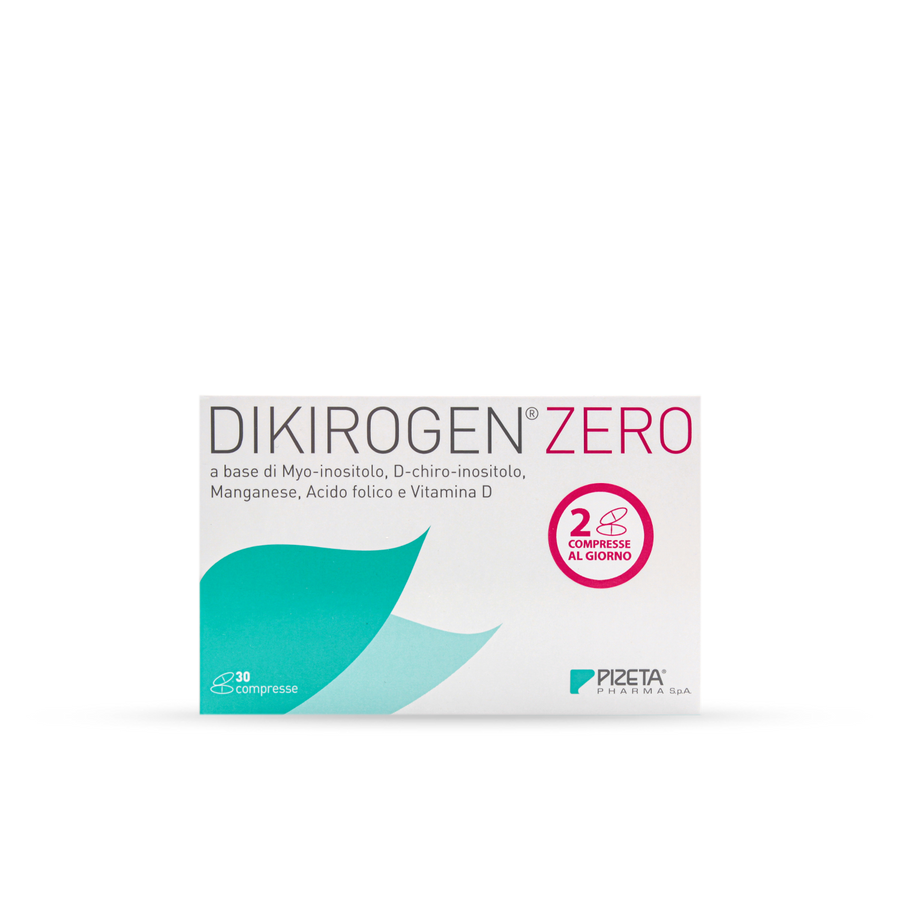
Dikirogen Zero Tablets
Dikirogen Zero is a dietary supplement useful for counteracting metabolic and reproductive imbalances associated with insulin resistance.
€20,32
VAT included

The online shop is currently available only in Italy. For purchases from outside Italy, please contact us at shop@pizetapharma.com
Your transaction is protected with advanced security measures to keep your information private.



| Componenti | Contenuto per dose giornaliera (1 compressa) | %VNR*/dose |
|---|---|---|
| N-acetilcisteina | 600 mg | - |
| Betaina | 250 mg | - |
| Vitamina B6 | 6 mg | 428 |
| Vitamina B2 | 4,8 mg | 342 |
| Folato | 400 µg | 200 |
| Vitamina B12 | 18 µg | 270 |

Dikirogen Zero is a dietary supplement useful for counteracting metabolic and reproductive imbalances associated with insulin resistance.
Dikirogen Zero is a dietary supplement useful for counteracting metabolic and reproductive alterations related to insulin resistance
Flavoxelle is a phytoestrogen-free dietary supplement suitable for alleviating the various symptoms associated with perimenopause and menopause.