Browse gallery
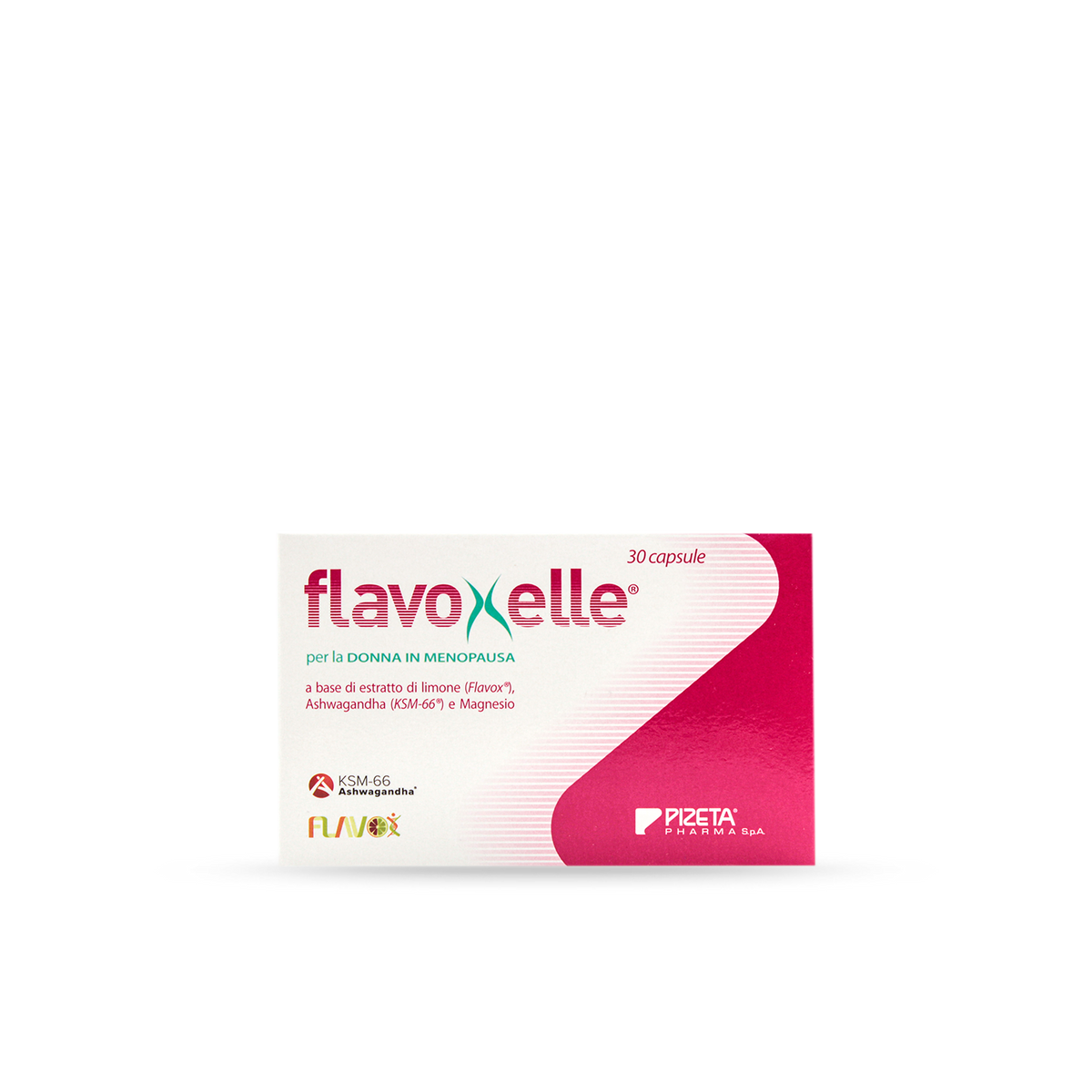
Flavoxelle
€25,52The online shop is currently available only in Italy. For purchases from outside Italy, please contact us at shop@pizetapharma.com
Accepted payments
Your transaction is protected with advanced security measures to keep your information private.

Ingredients
Allergens & specifications



phytoestrogen-free, patented
Daily dose and how to use

Nutrition facts

| Componenti | Contenuto per 1 cps | VNR %/1 cps | Contenuto per 2 cps |
|---|---|---|---|
| **KSM-66® ashwagandha e.s. – di cui withanolidi | 200 mg 10 mg | - - | 400 mg 20 mg |
| Flavox® limone e.s. – di cui polifenoli (catechine) – di cui bioflavonoidi | 100 mg 10 mg 10 mg | - - - | 200 mg 20 mg 20mg |
| Magnesio | 60 mg | 16 | 120 mg |
Warnings

When is it useful

You might also like
-
Iside Femme
La normativa sulla pubblicità dei dispositivi medici (Reg. (UE) 2017/745 e D.Lgs. 137/22) prevede che l’accesso alle informazioni di natura medica relative…
€16,06 VAT included -
-
Endomox 600
Endomox 600 is a dietary supplement that supports normal homocysteine metabolism*.
€23,38 VAT included